What If the New Job Isn't the Real Opportunity?
Arjun joined the new company on a Monday.
The first week was exciting.
New office. New people. New responsibilities. Everyone wanted to know about his previous experience. For the first time in years, he felt visible.
But by the third week, the excitement had settled.
And something unexpected happened.
He started noticing the same patterns.
Too many meetings.
Unclear priorities.
A manager who changed direction frequently.
Work that looked exciting on paper but was less interesting in practice.
Arjun smiled to himself.
He finally understood something important.
Changing jobs doesn't guarantee changing your experience.
Sometimes the real opportunity isn't a new company.
It's becoming a better version of yourself wherever you are.
Will I Still Want This Job After the Excitement Fades?
Every new job comes with a honeymoon period.
New title.
New salary.
New business cards.
New LinkedIn announcement.
Then Monday morning becomes Monday morning again.
The novelty disappears.
What remains?
The work.
The manager.
The culture.
The commute.
The expectations.
That's why you should evaluate the job you will have after six months, not the job you're imagining on the day you receive the offer.
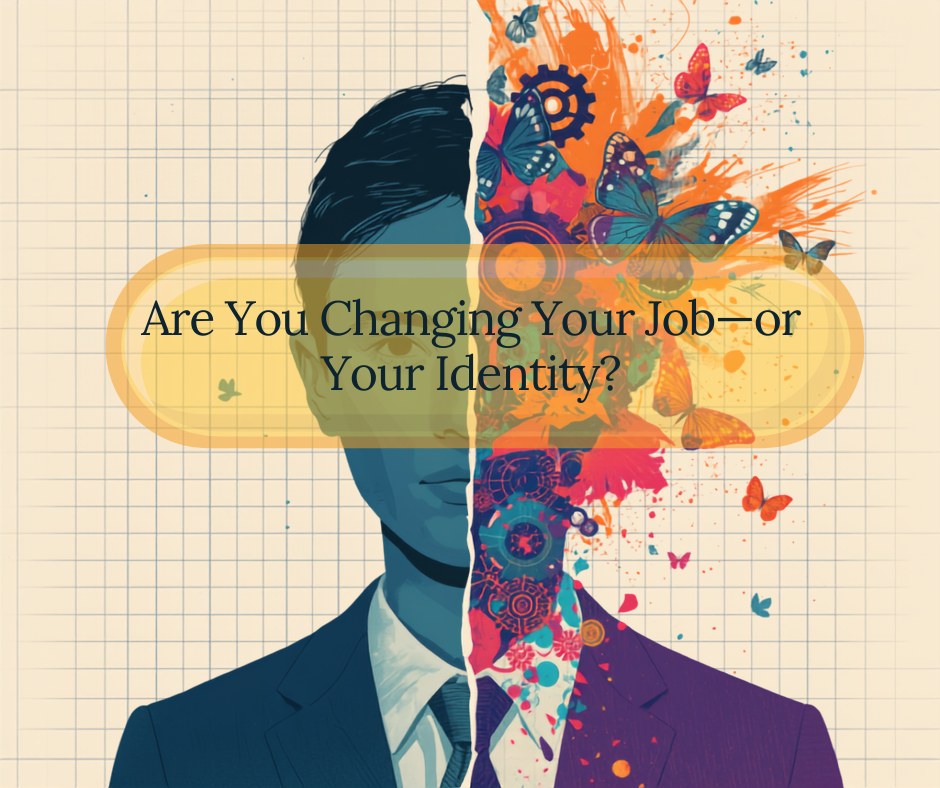
Are You Changing Your Job—or Your Identity?
Sometimes professionals chase titles because they believe the next title will finally make them feel successful.
Senior Manager.
Director.
Vice President.
Founder.
But a designation can change faster than a person.
If your confidence depends entirely on external recognition, another promotion may only create another target.
Arjun had spent years believing that a better title would make him feel more successful.
The new job taught him otherwise.
Confidence had to come first.
The Leadership Question Nobody Asks
When considering a new job, most people ask:
"Who will I report to?"
Very few ask:
"Who will I become under this leader?"
That's a much more important question.
A good leader can accelerate your career.
A poor leader can consume years of it.
Before accepting an offer, try to understand:
How does the manager give feedback?
How are disagreements handled?
Who gets promoted?
How are failures treated?
Does the team have autonomy?
What does success look like after one year?
You're not just joining a company.
You're joining someone's leadership environment.
What About Office Politics?
Arjun had once believed office politics was something successful professionals avoided.
He eventually learned something more practical.
Wherever people work together, there will be influence.
The question isn't whether politics exists.
The question is whether you can navigate it without losing your integrity.
Learn to:
Build genuine relationships.
Communicate your contributions.
Understand decision-makers.
Avoid unnecessary conflict.
Give credit generously.
Protect your reputation.
You don't have to become political. But you do need to understand how organisations actually work.
And Then Life Gets Involved
Six months after joining, Arjun's daughter started school.
His wife was building her own business.
His parents needed more support.
Suddenly, the job that looked perfect on paper had another dimension.
The commute was longer.
Travel increased.
Evening calls became common.
The salary was better.
But was his life better?
This is why career decisions cannot be evaluated using compensation alone.
A career is successful only when it fits the life you're trying to build.
The Vedic Idea of Dharma
This is where another traditional concept becomes relevant.
Dharma is a deep and context-dependent concept in Indian philosophical traditions. In broad terms, it can relate to one's responsibilities, values, duties, and the way one lives in alignment with them.
Applied thoughtfully to career questions, it raises an interesting question:
"Does the work I'm doing align with the responsibilities and values that matter to me at this stage of life?"
The answer can change.
What was right at 25 may not be right at 40.
A career built around rapid advancement may later need to accommodate family.
A secure corporate role may eventually give way to entrepreneurship.
A high-paying job may become less attractive when meaningful work becomes more important.
Career evolution is not failure.
It is often growth.
Timing Isn't Just About the Stars
Arjun had initially thought of timing as something outside himself.
A planetary period.
A transit.
A date.
He now understood another form of timing.
Personal timing.
You may have a fantastic opportunity but lack the financial capacity to take it.
You may have the skills but lack the confidence.
You may have the confidence but have family responsibilities that make relocation difficult.
You may have all of these—and still need another year of experience before the opportunity becomes truly valuable.
This is why a responsible career decision considers both:
external timing and internal readiness.
Vedic perspectives can provide one lens.
Your actual circumstances provide another.
Both matter.
When Should You Actually Move?
There is no universal answer.
But you're probably closer to readiness when:
You understand why you're moving.
You know what you're moving toward.
You have researched the opportunity.
Your finances can handle the transition.
Your family understands the implications.
You have the core skills required.
You're prepared for the learning curve.
You're not making the decision purely from anger or fear.
And perhaps most importantly:
You can explain your decision without blaming your current employer.
That is often a sign of maturity.
What Arjun Finally Understood
One evening, Arjun found the notebook from the week he had received the offer.
On the first page, he had written:
"What would have to be true for this move to be the right decision?"
He added another sentence underneath.
"I don't need certainty. I need clarity."
That became his new career philosophy.
Certainty is impossible.
Clarity is achievable.
And clarity comes from asking better questions.
Where AskVedicaa Can Help
Career decisions often involve questions that don't have simple answers.
AskVedicaa gives users a place to explore those questions through natural conversation and Vedic perspectives.
You might ask:
"I'm considering two job offers. How should I evaluate them?"
Or:
"I feel stuck in my current career. Is this a phase or should I consider a change?"
Or:
"What does my current Dasha traditionally indicate about career transitions?"
Or simply:
"I'm confused about my career. Help me think through it."
The value isn't in receiving a predetermined answer.
It's in exploring the question from multiple perspectives.
AskVedicaa combines Vedic Astrology, Numerology, Vastu, Panchang, and AI to make that exploration accessible in a conversational format.
A person searching for "best time to change jobs" may actually be struggling with career stagnation.
Someone searching for "career stagnation" may actually be experiencing burnout.
Someone searching for "burnout" may actually have lost their sense of purpose.
And someone searching for "career purpose" may be ready for an entirely different chapter of life.
The question is often only the doorway.
Continue Exploring Career Intelligence™
Frequently Asked Questions
Is there a perfect time to change jobs?
No. The right timing depends on your professional readiness, personal circumstances, financial position, market conditions, and—if you choose to explore it—traditional Vedic perspectives on timing.
Can Dasha determine when I should change jobs?
Dasha is traditionally used to understand planetary periods and their themes. It should not be treated as a guarantee that a specific career event will occur.
Is Saturn always bad for career growth?
No. Saturn is traditionally associated with discipline, responsibility, patience, and long-term effort. It is not simply a symbol of failure or delay.
Should I change jobs if I am unhappy?
Not automatically. First understand whether the problem is temporary frustration, burnout, career stagnation, poor leadership, lack of purpose, or genuine misalignment.
What is more important: salary or career growth?
Both matter. The right balance depends on your circumstances and priorities. A higher salary may be valuable, but long-term learning, leadership, health, and purpose also influence career satisfaction.
How can AskVedicaa help with career decisions?
AskVedicaa allows you to explore career questions through conversational AI and traditional Vedic perspectives. It is designed to support reflection and informed decision-making rather than make decisions for you.
Explore Your Career Questions with AskVedicaa
If you're wondering whether it's time for your next career move, don't make the decision from fear, frustration, or excitement alone.
Explore your question with AskVedicaa.
Bring your situation. Ask the difficult questions. Understand the traditional Vedic perspective. Then combine that insight with practical reality and make the decision that feels right for your life.
Because your career is not just about where you work.
It's about where your life is going.