How Do I Know If I Am on the Right Path
Understanding Doubt, Direction and Dharma
Sometimes the question appears when nothing is obviously wrong.
You have a job. You pay your bills. You take care of your family. You have responsibilities. Perhaps you have even achieved things you once worked very hard for.
And yet, somewhere along the way, a thought keeps returning: “Am I actually going in the right direction?”
You may dismiss it as a phase.
But then it comes back after another difficult day at work, while watching someone live a very different life, or after achieving something you once desperately wanted and discovering that it didn't feel as satisfying as expected.
The deeper question may not be “Should I change my life?”
It may be: “Does the life I am living still feel like mine?”
That deserves more than a simple yes-or-no answer.
The Right Path Doesn't Always Feel Easy
One of the easiest mistakes is assuming that the right path should feel comfortable.
It doesn't have to.
A demanding career can still be meaningful. A new responsibility can be difficult and still be right for you. Building a business can involve uncertainty while remaining aligned with what matters to you.
At the same time, something can look successful from the outside while gradually becoming disconnected from your values.
So discomfort alone cannot tell you whether you are on the wrong path.
Ask instead:
What is causing the discomfort?
Is it:
- temporary pressure?
- exhaustion?
- fear of failure?
- lack of growth?
- conflict with your values?
- or a deeper feeling that the direction itself no longer fits?
That distinction matters before making a major decision.
Are You Moving Toward Something—or Running Away?
Imagine you are unhappy at work.
The immediate thought may be:
“I need to quit.”
But quitting may not solve the actual problem.
Perhaps you need more autonomy.
Perhaps you have stopped learning.
Perhaps you want more meaningful work.
Perhaps you are simply exhausted and need healthier boundaries.
Before making the decision, ask two questions:
What am I trying to leave?
And:
What am I trying to move toward?
The second question is particularly important.
If you cannot yet describe what you are moving toward, you may need clarity before action.
Changing direction can be healthy. Escaping discomfort without understanding it can simply move the same problem somewhere else.
What Does “The Right Path” Actually Mean?
There may not be one permanent road you are supposed to follow.
Your priorities change as your life changes.
At one stage, financial security may be your priority. Later, family, independence, creativity, learning, contribution or spiritual growth may matter more.
That does not make your earlier choices wrong.
It means your definition of a fulfilling life has evolved.
This is why people sometimes remain committed to a direction long after it has stopped fitting them.
They think:
“I've already invested too much to change.”
But past investment does not automatically determine what comes next.
Your experience still has value. Your responsibilities remain real. But your direction can evolve.
A Vedic Way of Thinking About Direction: Dharma
The traditional Vedic concept of dharma offers a broader way to think about direction.
Dharma is often translated as “duty” or “purpose,” but it is wider than either word.
It can involve:
- responsibility
- values
- right conduct
- one's role in life
- contribution
- living in accordance with one's nature and circumstances
It is therefore different from the modern idea that everyone has one hidden “life purpose” waiting to be discovered.
Dharma can express itself differently at different stages of life.
The responsibilities of a student are different from those of a parent. An employee's role may differ from an entrepreneur's. Your relationship with your own growth can also change.
So instead of asking only: “What career am I supposed to have?”
a deeper question may be: “What way of living is consistent with my values, responsibilities and nature at this stage of my life?”
Your career may be one expression of that. It does not necessarily define your entire dharma.
What Can Vedic Astrology Add?
Vedic astrology can provide another framework for examining questions of direction and purpose.
Depending on the question, a Vedic analysis may consider:
Ascendant: identity, temperament and approach to life.
5th house: creativity, intelligence, interests and self-expression.
9th house: dharma, higher learning, philosophy, beliefs and broader meaning.
10th house: profession, responsibility, public role and contribution.
Moon: emotional and mental experience.
Atmakaraka: in Jaimini astrology, traditionally considered in relation to deeper life themes and soul significations.
Mahadasha and Antardasha: planetary periods used to examine which themes may become more prominent during different phases.
The important point is how these factors are interpreted.
Not: “Your chart says you must do this.”
But: “What themes does my chart suggest I should explore in relation to the question I am facing now?”
That keeps astrology as a framework for understanding rather than a rigid verdict.
Three Signs Your Direction Deserves a Closer Look
1. Achievement is increasing, but satisfaction is decreasing
You continue progressing externally, but the progress feels less personally meaningful.
2. You repeatedly imagine a different kind of life
You may not know exactly what you want, but the same themes keep appearing: more freedom, creativity, meaningful work, independence or time.
Those recurring thoughts may point toward needs worth exploring.
3. Your definition of success has changed
Perhaps money once mattered most and now you value time.
Perhaps recognition once motivated you and now you want autonomy.
Perhaps stability was once essential and now you want growth.
This does not necessarily mean you have become less ambitious.
Your ambition may simply have changed direction.
Before You Change Your Life, Change the Question
Instead of:
“Should I quit?”
ask:
“What exactly am I trying to change?”
Instead of:
“Should I move?”
ask:
“What do I believe the new place will give me that I am missing here?”
Instead of:
“Should I start a business?”
ask:
“What am I actually seeking through entrepreneurship—autonomy, creativity, financial opportunity, recognition or freedom?”
And instead of immediately asking whether to leave a relationship:
“What has changed between us, and have I understood the problem clearly?”
Better questions often produce better decisions.
A Simple Right-Path Test
Before making a major decision, write down:
| Question | Your Answer |
|---|---|
| What is working in my current life? | |
| What is no longer working? | |
| What do I want to move toward? |
Then ask yourself: “If nothing changed for the next three years, would I be comfortable with that?”
Don't treat the answer as a prediction.
Use it as information about your own reaction to the status quo.
Relief may suggest that you are overlooking what already works.
A strong sense of stagnation may suggest that something deserves deeper examination.
Neither response gives you the answer by itself. It simply gives you another piece of information.
Sometimes You Don't Need a New Life
The answer may not be to abandon your career, relationship or city.
The problem may be how you are living within your current circumstances.
You may need:
- better boundaries at work
- more time with family
- a creative outlet
- more learning
- greater independence
- a healthier routine
- a different role within the same career
- more meaningful relationships
- time for spiritual reflection
Sometimes the useful change isn't changing everything.
It is identifying what has become misaligned and addressing that first.
What If You Still Don't Know?
You don't need to know what the next ten years will look like.
Start by observing patterns.
Ask:
- What consistently gives me energy?
- What repeatedly drains me?
- Which choices do I keep postponing?
- What qualities of other people's lives make me envious?
- What might that reveal about my unmet needs?
- Which responsibilities still feel meaningful?
- Which achievements no longer feel rewarding?
Clarity often develops after you understand the problem, not before.
You don't always find direction by predicting the future.
Sometimes you find it by becoming more honest about the present.
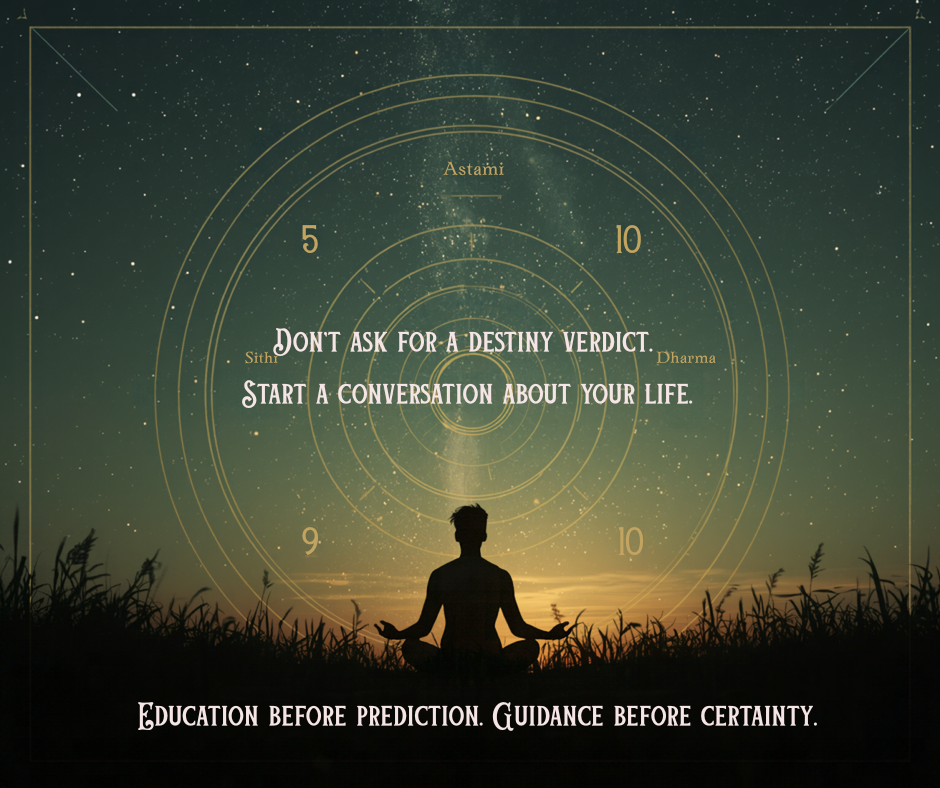
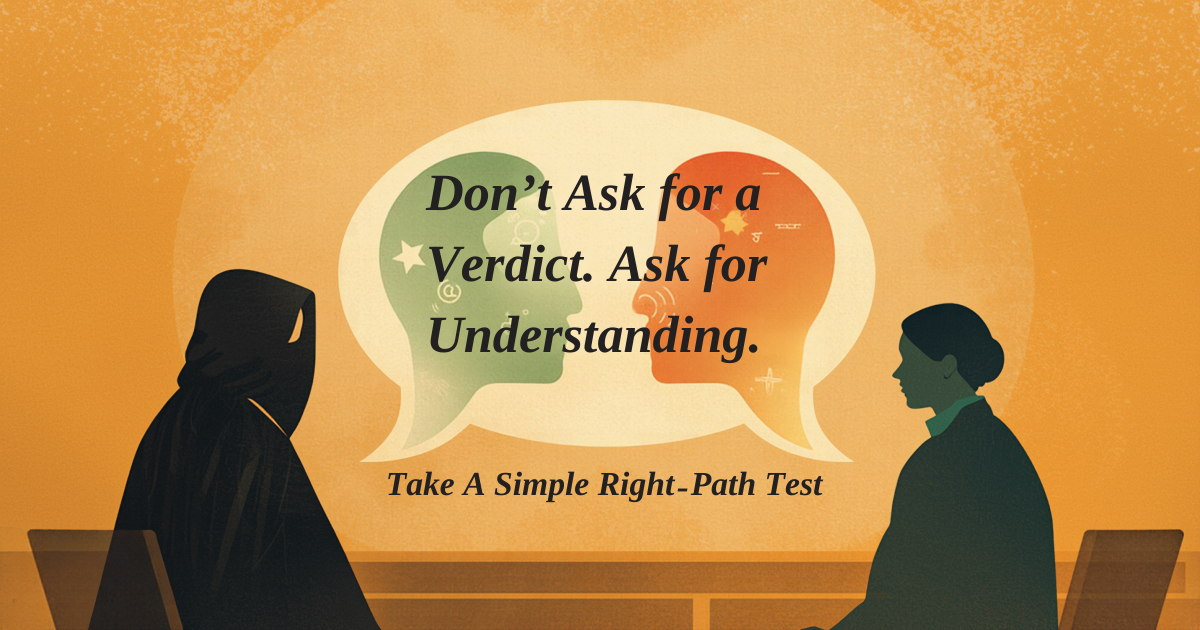
Don't Ask for a Verdict. Ask for Understanding.
If you are questioning your direction, a prediction may provide temporary reassurance.
But your real need may be deeper:
Why am I asking this question now?
This is where a personalised Vedic conversation can be useful.
With AskVedicaa, you can bring your actual question, birth details and personal context into the conversation.
For example:
- “Why am I questioning my career at this stage of life?”
- “Does my current phase support a change in professional direction?”
- “What does my birth chart suggest about purpose and dharma?”
- “Which areas of life deserve more attention right now?”
- “Am I looking for a new career, or more meaning in my existing life?”
- “What do my Mahadasha and Antardasha indicate about this period?”
- “What should I explore before making a major decision?”
AskVedicaa brings together the relevant Vedic factors, planetary periods, numerology and the specific question being asked to create a contextual explanation.
The purpose is not to hand you a predetermined decision.
It is to help you understand the situation from another perspective so you can think more clearly about your own choices.
Sometimes you don't need someone to tell you which road to take.
You need to understand why you are standing at the crossroads in the first place.
Your question. Your birth chart. Your context. A Vedic conversation built around the decision you are actually facing.
If you have been quietly asking yourself, “Am I still on the right path?”, don't dismiss the question.
Ask the question behind the question.