Should I Start My Own Business?
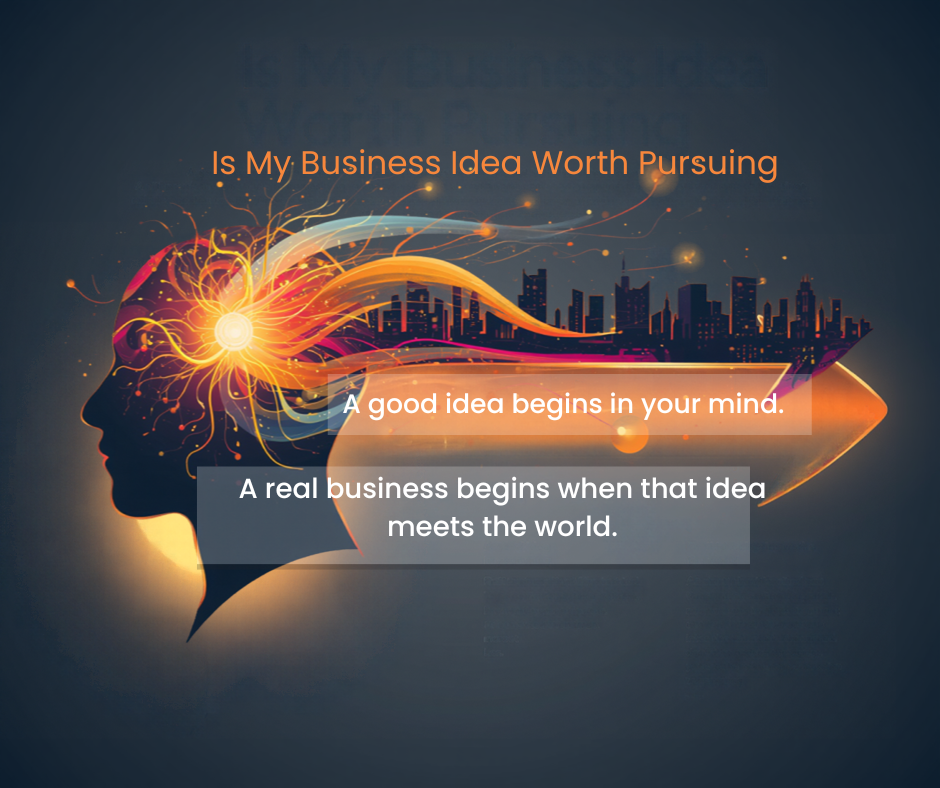
Starting a business is not about waiting until you feel fearless. It is about becoming prepared enough to take the next intelligent step.
Quick Answer: How Do I Know If I Am Ready to Start a Business?
You are ready to explore business when you understand problem you solve, who your customer is, how you will make money, and can test idea before overcommitting financially. You don't need to feel completely ready. Distinguish between "I want to escape my job" vs "I want to build something useful." Second one is stronger foundation. Traditional Vedic perspectives can add timing context but should complement market research and financial planning.
The Thought Usually Starts Quietly — Are You Running Away or Building Toward?
It begins on ordinary day. Difficult meeting. Promotion that didn't happen. Someone else's success story. While driving home: "What if I did this for myself?" For some, question disappears. For others, it returns every Sunday evening. Slowly question changes from "What if?" to "Should I actually do it?" Starting looks exciting from outside: Freedom, independence, building own, wealth. But behind success is uncertainty, financial pressure, self-doubt, long hours, failure.
Many believe entrepreneurship is about courage. Courage matters, but courage without clarity is recklessness. Better question: "What am I actually trying to build, and why?"
Rahul spent 15 years in corporate. Often told friends "One day, I will start company." But when he examined honestly, he didn't know what business. He simply wanted to leave job. He was not being pulled toward entrepreneurship. He was being pushed away from dissatisfaction. Those are not same.
Are You Confusing Escaping a Job With Building a Business?
Bad job makes entrepreneurship look perfect. Difficult manager makes independence irresistible. But starting business does not remove problems. It changes problems. Instead of one manager, you answer to customers, investors, employees, suppliers. Instead of worrying about salary, you worry about payroll. Instead of one role, you initially do ten. Ask: "If I genuinely enjoyed my current job, would I still want to build this business?" If yes, desire may be deeper. If no, solve career problem first.
Does Your Business Idea Solve a Real Problem People Pay For?
Many say "I have great idea." More important: "Whose problem does it solve?" Business exists because someone pays for solution. Ask:
What problem am I solving?
Who experiences this problem? How are they solving it today?
Why would they choose my solution?
Are they willing to pay?
You don't need perfect plan. Need curiosity. Talk to 10 potential customers. Market teaches things imagination never can.
Is Passion Enough to Start a Business?
You may love photography, fitness, astrology, cooking. Passion helps you stay during difficult periods.But business also requires demand, positioning, revenue, operations.
Strongest businesses exist where three meet:
Something you care about
Problem people genuinely have
Solution people willing to pay for
Intersection matters more than passion alone.
What Is Your Financial Readiness? The Question Nobody Likes
Emotionally expensive when financial pressure overwhelming.
Ask:How long can I survive without regular income?
Monthly personal expenses?
Business operation cost? Savings?
Need funding? What if revenue takes 12 months longer?
Financial pressure affects decision-making. When you desperately need every customer, hard to think strategically. Preparation creates options?
Do You Need to Quit Your Job to Test Your Idea?
Biggest misconception. You can test while employed (check employment obligations):
Research market
Speak to potential customers
Build prototype / minimum viable product
Test service with 1-2 clients
Build audience, validate demand
Small experiment teaches more than 6 months imagination. Failure during testing cheaper than failure after investing everything.
Are You Ready for Uncertainty and Identity Shift?
Employees get clarity: salary date, defined role, manager. Business owners often don't know when next customer arrives, whether revenue increases, whether idea succeeds. Question is not "Do I enjoy uncertainty daily?" Few do. Question: "Can I continue making reasonable decisions when certainty unavailable?" Also identity shift: When you work for company, organisation provides identity. When you build yourself, nowhere to hide behind title. Need emotional resilience to separate "Business facing problem" from "I am failure."
Should You Start Business With Friends? Partnership Check
Many businesses begin with friends. But friendship and business compatibility different. Before partnership, discuss and write:
Roles and decision authority
Financial contribution and ownership
Conflict resolution
Long-term vision
What happens if someone wants to leave
Difficult conversation before starting easier than legal dispute later. Traditional Vedic compatibility may provide additional perspective, but need clear agreements.
How Does AskVedicaa Analyze Business Readiness?
1. Core Pattern: 7th House & 10th House — Business vs Job
10th house = career. 7th house = partnerships and business. Strong 7th house, 10th lord in 7th, Mercury strong = business indication. Saturn strong in 10th = better in structured career first, business later. Rahu in 10th = unconventional business.
2. Supporting Influences: Mercury, Mars, Saturn
Mercury = business intelligence. Mars = risk appetite. Saturn = discipline, long-term. Weak Mercury = idea but execution challenge — need co-founder. High Mars low Saturn = start fast but struggle with operations.
3. Timing & Context: Dasha Analysis
What Mahadasha running? Mercury/Mars/Jupiter Dasha often supports new venture initiation. Saturn Dasha = build foundation, test slowly, don't scale aggressively. Rahu Dasha = desire for entrepreneurship but clarity after testing. Jupiter transit over 7th = partnership window.
4. Practical Path: Test, Prepare or Launch?
If no customer interviews done: Test — talk to 10 customers in 30 daysIf financial buffer <6 months: Prepare — build side income, reduce expensesIf both done: Launch small — MVP in 90 days, not perfect product
Timing provides context. Execution creates results. Favourable period cannot create customers.
7 Questions Before You Start — Final Test
1. What problem am I solving? Can you explain in 1 sentence?
2. Who is customer? Avoid "everyone." Be specific.
3. Why would someone choose me? Meaningful difference?
4. How will business make money? Path to revenue, not every detail.
5. What is smallest way to test idea? Start with learning, not spending.
6. Can I handle uncertainty reasonably? Not perfectly, but reasonably.
7. Why do I want this? Your reason will be tested when excitement disappears.
When Are You Ready vs When Should You Slow Down?
You may be ready when:
Understand problem reasonably well
Willing to learn from customers
Can test before overcommitting
Understand financial position
Accept first version will change
Slow down if:
Have not spoken to potential customers
Leaving only because hate job
No understanding of finances
Expect immediate success
Investing money you cannot afford to lose
Entering partnership without clear agreements
Slowing down is not weakness. Smartest entrepreneurial decision is sometimes better preparation.
How AskVedicaa Helps You Explore Business Question?
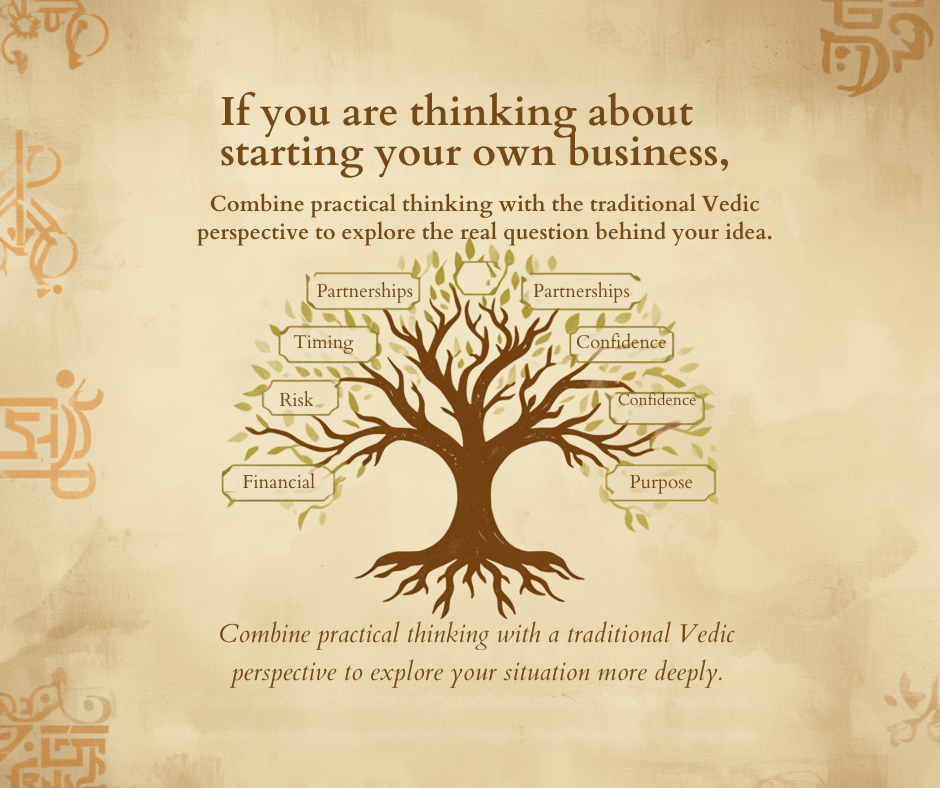
Question "Should I start business?" is rarely only about business. Behind it: Money, confidence, timing, partnerships, purpose, risk, family responsibilities. Ask naturally in AskVedicaa: "I want to start business but afraid of losing financial stability. Should I test idea while keeping job? What does my current Dasha suggest for risk?
"Get Evidence Lens analysis in 60 seconds. Am I Ready for Business? Analyse on AskVedicaa
Frequently Asked Questions
Q1: How do I know if I am ready to start a business?
You may be ready to explore when you understand problem to solve, have some understanding of potential customers, know financial situation, and are willing to test and learn before overcommitting.
Q2: Should I quit my job before starting a business?
Not necessarily. Many validate idea while employed depending on circumstances and employment obligations. Testing early is cheaper than failing after investing everything.
Q3: Do I need a lot of money to start a business?
Depends on type. Some require significant capital, service/digital may require less initially. Important is understanding both personal and business financial requirements and having 6-month buffer.
Q4: What if my business idea fails
Failure is possible. Testing ideas early, learning from customers, avoiding unnecessary financial risk reduces cost of failure. 70% startups fail due to no market need.
Q5: Can Vedic astrology help decide whether to start business?
Traditional Vedic astrology can offer perspectives on personal tendencies, partnerships (7th house) and timing (Dasha). However business decisions should also be based on market research, financial planning, customer validation.