Is It Time for a Major Life Change?
There comes a point when you stop saying:
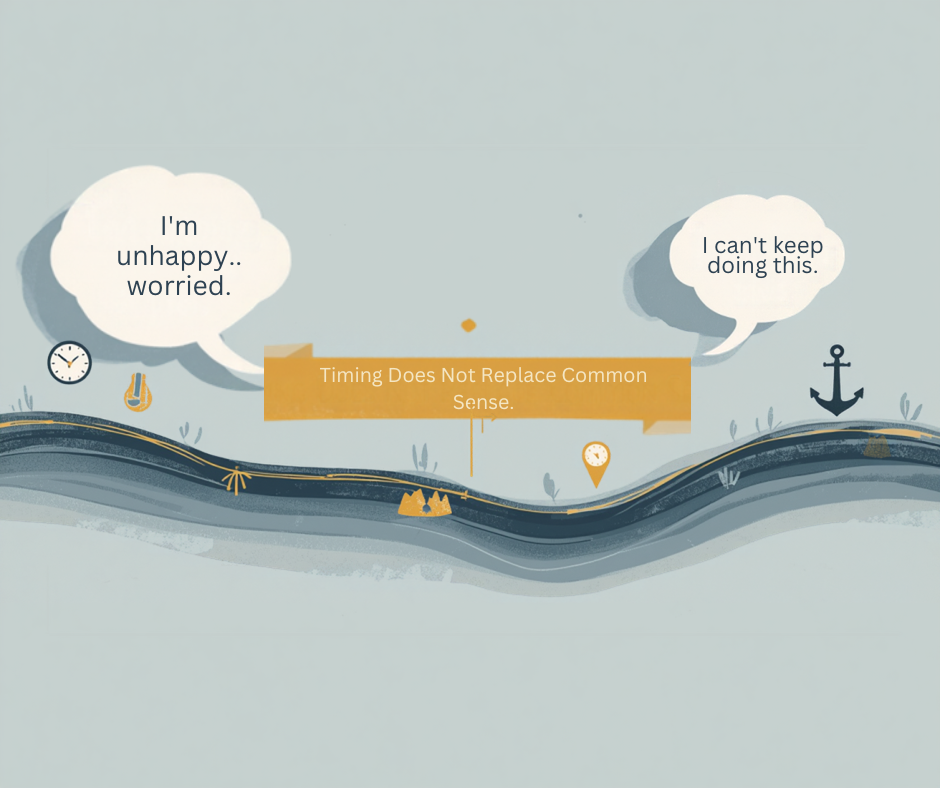
“I'm unhappy.”
And start thinking:
“I can't keep doing this.”
The job that once excited you feels exhausting.
The relationship that once felt secure feels different.
The city you once loved no longer feels like home.
The routine that once gave you stability now feels restrictive.
Yet you hesitate.
You have bills, responsibilities, family, a career and people who depend on you.
So you tell yourself:
“Maybe things will get better.”
Sometimes they do.
But sometimes the uncomfortable feeling keeps returning.
And eventually the question becomes:
“Is my life asking me to change direction?”
Not Every Difficult Phase Means You Need a New Life
This is the first distinction to make.
A difficult month does not automatically mean you should quit your job, end a relationship, move cities or start over.
Sometimes you are simply exhausted.
Sometimes you need rest.
Sometimes the problem is a difficult manager, poor boundaries or a temporary situation.
But if the dissatisfaction continues after reasonable attempts to improve the situation, something deeper may deserve examination.
Ask:
“Is this a temporary problem, or has something fundamental changed?”
That question can protect you from two opposite mistakes:
- Making a dramatic decision because of a bad phase
- Staying in an unsuitable situation for years because change feels frightening
A Bad Phase or the Wrong Direction?
Imagine you normally enjoy your career, but your workload suddenly becomes unreasonable and your manager is difficult.
You become exhausted.
That does not necessarily mean you need a new career.
Now imagine the situation improves.
Your manager changes. Your workload becomes manageable. Yet you still feel empty.
You still have little interest in the work.
You keep imagining another kind of life.
That deserves a different kind of examination.
The problem may no longer be the circumstances. It may be the direction.
Five Signs Your Priorities May Be Changing
No single sign proves you need a major life change. But recurring patterns deserve attention.
1. Your old goals no longer excite you
You finally achieve something you worked toward for years, yet satisfaction does not arrive.
You may not have failed.
You may have changed.
2. You repeatedly imagine another life
Another career.
Another city.
Another business.
Another lifestyle.
Occasional curiosity is normal. But an idea that keeps returning for months or years deserves exploration.
3. Your life is increasingly driven by obligation
“I have to.”
“People expect me to.”
“What will everyone say?”
“It is too late to change.”
Responsibility matters. But a life built entirely around obligation can disconnect you from your own priorities.
4. Rest does not solve the dissatisfaction
You take a holiday. Sleep more. Spend time with friends.
You feel better temporarily.
Then the same dissatisfaction returns.
Perhaps the problem is not only exhaustion.
5. Staying feels more frightening than changing
Imagine nothing changes for five years.
Same work.
Same routine.
Same environment.
How does that feel?
Now imagine making a meaningful change.
Which possibility creates more fear?
And which creates more energy?
These answers do not make the decision for you. They reveal what you may need to examine.
Fear Does Not Automatically Mean “Don't Do It”
Fear is often misunderstood.
“I'm scared, therefore this must be the wrong decision.”
Not necessarily.
Fear can simply mean that something matters.
Instead of asking:
“Am I afraid?”
ask:
“What exactly am I afraid of?”
Fear of financial insecurity calls for financial planning.
Fear of disappointing family calls for honest conversation.
Fear of failure calls for understanding the downside.
Fear of uncertainty calls for experimentation.
When fear becomes specific, it becomes easier to work with.
Are You Changing—or Escaping?
This distinction can prevent expensive mistakes.
“I hate my job, so I'll start a business.”
“My relationship is difficult, so I'll move.”
“I'm unhappy here, so I'll move abroad.”
A new environment does not automatically solve an internal problem.
If poor boundaries are causing exhaustion, a new job may eventually create the same pattern.
If difficult conversations are being avoided, another relationship may not solve the underlying issue.
Before making a major change, ask:
“Am I moving toward something—or simply running away from something?”
Ideally, understand both.
What Does Vedic Astrology Say About Major Life Changes?
Vedic astrology provides traditional frameworks for examining periods when particular areas of life may become more active or subject to reassessment.
Depending on the question, analysis may consider:
- Ascendant and Ascendant lord
- Houses relevant to the specific area of change
- Planetary strengths and influences
- Mahadasha
- Antardasha
- Relevant transits
- Divisional charts where appropriate
- The relationship between the active planetary period and the actual life question
The important distinction is between timing and instruction.
A planetary period may coincide with a period of change.
That does not automatically mean:
“You must change your life.”
A better question is:
“What kind of change or reassessment does this period suggest I should examine?”
The answer may involve career, relationships, home, responsibility, identity, finances or spiritual development.
Or the change may be primarily internal.
Why Mahadasha and Antardasha Matter
The birth chart provides the broader framework.
Mahadasha and Antardasha bring timing into the conversation.
Suppose someone asks:
“Why have I suddenly become dissatisfied with my career after being happy with it for ten years?”
A useful Vedic analysis would not simply look at the 10th house and declare a career change.
It can examine the active Mahadasha and Antardasha, their planetary significations, connections with relevant houses and the wider chart context.
The questions then become more useful:
- Is this a period of reassessment?
- Is a new responsibility emerging?
- Is the pressure asking for adaptation?
- Is a new direction worth exploring?
- Is the change internal rather than external?
- Is preparation more appropriate than immediate action?
This is closer to the real problem a person is trying to solve.
Timing Does Not Replace Common Sense
Even if a Vedic analysis suggests that a particular period may be supportive for transition, it does not mean:
“Quit tomorrow.”
You still need to consider:
- Savings
- Skills
- Family responsibilities
- Opportunities
- Market conditions
- Contracts and obligations
- Risks
- Your capacity to handle the transition
Similarly, a challenging period does not mean:
“Do nothing.”
It may suggest greater preparation, patience or caution.
Timing does not eliminate uncertainty. It gives you another framework through which to think about it.
Sometimes the Change Is Internal
Not every major transformation requires a new job, relationship or city.
You may need to:
- Stop seeking constant approval
- Establish stronger boundaries
- Change your definition of success
- Reconnect with an abandoned interest
- Spend more time with family
- Reduce unnecessary commitments
- Develop a spiritual practice
- Let go of an outdated identity
Your external life may remain largely unchanged.
But your relationship with it can change significantly.
Transformation does not always mean changing your circumstances. Sometimes it means changing how you relate to them.
A Better Way to Make a Major Decision
Don't ask for one giant answer.
Break the decision down.
1. What exactly do I want to change?
Be specific.
2. Why do I want the change?
Is it growth, exhaustion, fear, frustration or genuine alignment?
3. What happens if I don't change?
Imagine one, three and five years ahead.
4. What happens if I do?
Consider both opportunity and risk.
5. What would make the change safer?
Build a plan.
6. Is now the time to act—or the time to prepare?
This final question is where timing analysis can become particularly useful.
You Don't Always Have to Leap
If you are considering a career change, research the field.
Talk to people working in it.
Take a course.
Build a small project.
Test a business idea.
Save money.
If you are considering moving, spend time in the location first.
You can often test a direction before committing to it.
A frightening leap can become a series of smaller decisions.
AskVedicaa: Ask the Real Question
Instead of asking:
“What is my destiny?”
start with what is actually happening.
For example:
“I have been unhappy in my career for the last year. Is this dissatisfaction temporary, or does my current Vedic period suggest that I should seriously explore a change?”
Then ask:
“What does my current Mahadasha and Antardasha indicate about this phase?”
“Which life areas are most active?”
“What should I be careful about before making a major decision?”
“Would preparation now and action later make more sense?”
This is the difference between asking for a prediction and seeking guidance.
Your birth chart provides context. Your question provides direction.
AskVedicaa is designed around that conversation.
Before You Change Your Life, Change the Question
Instead of:
“Should I change my life?”
ask:
“What exactly is no longer working?”
Instead of:
“Should I quit?”
ask:
“What am I moving toward, and what am I moving away from?”
Instead of:
“Will this change work?”
ask:
“What would make this change more likely to work?”
Instead of:
“Is this the right time?”
ask:
“What does this phase support me doing—acting, preparing, reassessing or waiting?”
Better questions do not guarantee better outcomes.
But they create better thinking.
Quick Answer: Is It Time for a Major Life Change?
Maybe—but persistent dissatisfaction alone is not enough reason for an immediate major decision.
First determine whether you are experiencing temporary exhaustion, a specific problem, an unhealthy situation or a deeper mismatch between your current life and your changing priorities.
Vedic astrology can provide another perspective through the birth chart, relevant houses, planetary periods, Mahadasha, Antardasha and transits.
Use that perspective alongside practical planning and your own judgment.
The question is not:
“What does my chart tell me to do?”
It is:
“What is this phase of my life asking me to understand, prepare for or change?”
Frequently Asked Questions
How do I know if I really need to change my life?
Look for persistent patterns rather than one difficult period. If dissatisfaction continues despite reasonable attempts to improve your circumstances, explore whether your direction or priorities have changed.
How do I know whether I am escaping or genuinely changing?
Ask what you are moving toward, not only what you are moving away from. A meaningful change usually has a positive direction behind it.
Can astrology tell me when to make a major life change?
Vedic astrology can be used to examine planetary periods and transits associated with particular themes and transitions. It should provide perspective on timing and context, not a guaranteed instruction.
What is the role of Mahadasha and Antardasha?
They are traditional Vedic timing frameworks. Their interpretation can help examine which planetary influences and life themes are active during a particular period.
Should I change my career if I feel unhappy?
Not necessarily. First determine whether the problem is your profession, organisation, workload, manager, environment or something deeper.
Can a major life change be spiritual rather than practical?
Yes. Transformation can involve changing your priorities, values, identity, habits or relationship with life without changing your job, home or relationships.
Can AskVedicaa help with a major life decision?
AskVedicaa can help explore the Vedic perspective on a specific decision using relevant birth-chart factors and planetary periods. It is most useful when the question is connected to your actual circumstances rather than framed as a generic destiny prediction.
You May Not Need a New Life. You May Need a New Direction.
Major change can be seductive because it promises a clean beginning.
But changing your circumstances does not automatically change your habits, fears or unresolved questions.
So don't change everything simply because you are uncomfortable.
But don't ignore persistent discomfort simply because change is frightening.
Pause. Understand. Question. Prepare. Then decide.
Your birth chart may offer another perspective.
Your real-life experience provides the evidence.
Your choices determine what you do with both.
Don't ask only, “Should I change?”
Ask: “What is changing in my life—and what should I understand before I act?”
That is where Vedic guidance becomes useful.
Not as a command.
Not as certainty.
But as another lens through which to understand the decision in front of you.
Education before prediction. Guidance before certainty.
Have a question? Ask Vedicaa.
Explore your question through Vedic wisdom, understand the relevant factors, and make your own informed decision.
Relationship I Financial Stress I Business / Entrepreuners I Why is my career stuck I Wealth corner you house is missing I