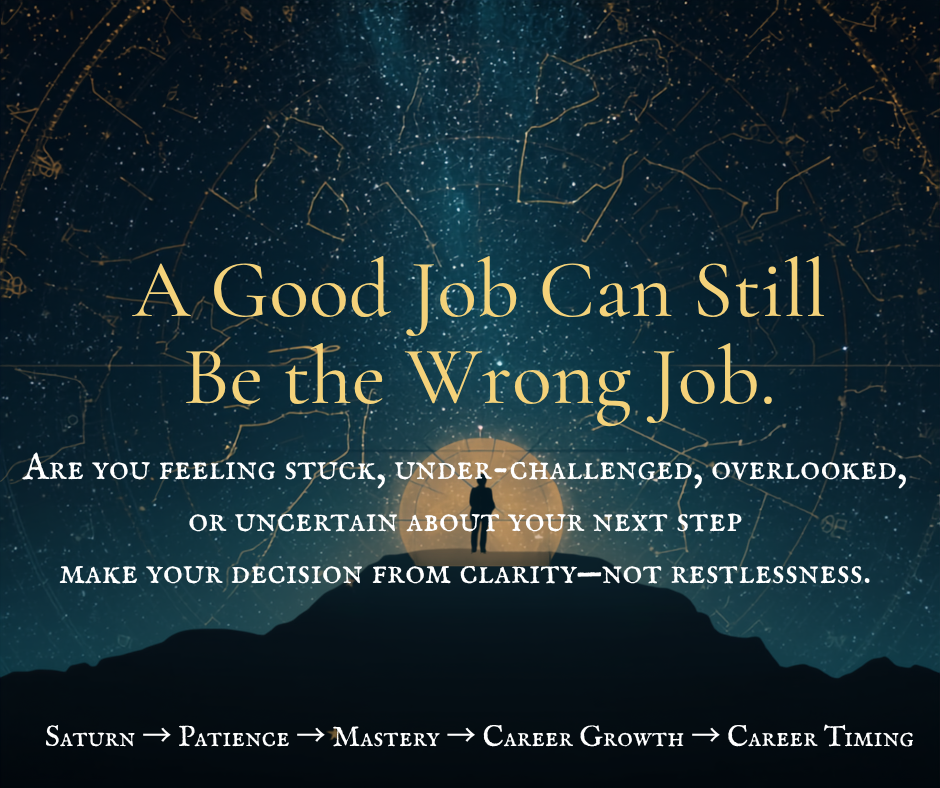
If your job no longer challenges you, teaches you, or aligns with the person you're becoming, it may be time to reconsider your career direction. But feeling uncomfortable doesn't always mean you've outgrown your job. Sometimes discomfort means you're growing. Sometimes it means you're stagnating. And sometimes it means your priorities have changed. The important question is not simply:
"Have I outgrown my job?"
It is:
"Is this job still capable of supporting the person I am becoming?"
The Day Neha Realised She Had Become Too Good at Her Job
Neha had been doing the same job for six years.
She was good at it. Very good.People came to her when something went wrong. Her manager trusted her. New employees were trained by her. Clients knew her. She could complete work that once took two days in a few hours.
Everyone considered her dependable. And that was the problem. One Tuesday morning, her manager walked over. "Can you take care of this?" Neha looked at the task. She knew exactly what to do. She could almost complete it in her head.
There was no challenge. No curiosity. No uncertainty. She opened her laptop. Finished the work. Sent the email. And stared at the screen.
For a moment, she felt something she couldn't explain.
It wasn't anger. It wasn't exhaustion. It wasn't even boredom. It was something quieter. She had nothing left to learn. When Being Good at Your Job Becomes the Problem
Career stagnation rarely looks like failure.
That's what makes it dangerous.
You can be successful and stagnant at the same time. Your salary may be increasing. Your responsibilities may be growing. People may respect you. Your performance reviews may be excellent. And yet your professional growth may have stopped. You become better at doing the same thing. But not better at doing something new. That's the difference between experience and growth.
Experience tells you: "I've done this before."
Growth asks:
"What can I do now that I couldn't do before?" The Comfortable Trap Neha had another reason to stay. She was comfortable. She knew the systems. She knew the people. She knew exactly what her manager expected. There were no surprises. And comfort can feel like security.
But comfort has a hidden cost.
The longer you stay in a role that doesn't stretch you, the easier it becomes to stop looking elsewhere.
Your skills become specialised. Your curiosity declines. Your confidence in unfamiliar situations weakens. Eventually, the job feels safe because you know everything about it. But the outside world may have changed while you were becoming comfortable.
Career Stagnation → Comfort Zone → Skill Development → Career Growth
The Question Neha Couldn't Answer
That evening, her husband asked:
"How was work?"
"Fine."
"What did you do?"
She thought about it.
The answer was almost embarrassing.
"Pretty much what I do every day."
He smiled.
"Then why don't you look for something else?"
Neha immediately responded:
"Because I have a good job."
Then she stopped.
That sentence had protected her for years.
I have a good job.
But was it still a good career?
Those aren't necessarily the same thing.
A Good Job Can Still Be the Wrong Job
A job can be:
Well paid
Secure
Respectable
Flexible
Comfortable
And still be wrong for your next stage of life. Maybe you've developed beyond the role. Maybe your priorities have changed. Maybe you want leadership. Maybe you want creativity. Maybe you want entrepreneurship. Maybe you want more time with your family. Maybe you simply want to learn again.
None of these automatically mean your current job is bad.
It may simply mean you have changed.
Have You Outgrown the Job—or Are You Avoiding Growth?
This is where things become complicated.
Sometimes people say:
"I've outgrown my job."
But what they really mean is:
"I'm uncomfortable because I'm being asked to grow."
There is a difference.
Imagine your manager gives you responsibility for a major project.
You're nervous.
The project requires skills you don't yet have.
You feel uncomfortable.
That may not be stagnation.
It may be growth.
On the other hand, imagine you've been doing the same work for three years, with no meaningful learning, responsibility, or progression.
That's different.
Growth often feels like:
"I don't know if I can do this."
Stagnation often feels like:
"I already know exactly how this will go."
Learning to recognise the difference can change your career.
The Five Signs You've Probably Outgrown Your Role
1. You Can Do the Work on Autopilot
Neha could predict her entire workday.
She knew the questions before they were asked.
She knew the problems before they appeared.
Efficiency is valuable.
But when everything becomes automatic, ask yourself:
"What am I learning now?"
If the answer is consistently "nothing," pay attention.
2. Your Biggest Challenge Is Staying Interested
You aren't struggling to complete your work.
You're struggling to care about it.
That's different.
You finish everything.
You meet deadlines.
You attend meetings.
But there is no sense of achievement.
Your work has become maintenance rather than development.
This can be an early sign of career stagnation or, in some cases, burnout.
The two should not be confused.
3. Younger Employees Are Doing Work You Want to Be Doing
One afternoon, Neha watched a new employee present an idea to senior management.
She wasn't jealous.
She was fascinated.
She wanted to be doing that.
That was her clue.
Sometimes other people's careers reveal desires we haven't admitted to ourselves.
Instead of asking:
"Why is she getting that opportunity?"
Ask:
"Why do I want that opportunity?"
The answer may reveal your next career direction.
4. Your Skills Are Becoming Narrower
Specialisation can be valuable.
But excessive dependence on one narrow skill can create risk.
Ask:
Are my skills still relevant?
Am I learning new technology?
Am I developing transferable skills?
Could I compete for a different role tomorrow?
A career should ideally become broader and deeper over time.
5. You Keep Thinking About "Something Else"
The thought doesn't disappear.
It returns during the commute.
On Sunday evenings.
While scrolling LinkedIn.
When talking to old colleagues.
You don't necessarily know what "something else" means.
But you know your current role isn't the whole story anymore.
That feeling deserves exploration.
Not an impulsive resignation.
What Vedic Wisdom Adds to This Question
Traditional Vedic thought offers an interesting perspective on periods of change.
Life is not always expected to remain in one state.
Different phases can bring different responsibilities, lessons, opportunities, and priorities.
In Vedic Astrology, practitioners may examine factors such as:
Planetary periods or Dasha
Transits
Career-related houses
Planetary strengths
Broader chart patterns
These are traditionally interpreted together when exploring professional phases.
The purpose should not be to declare:
"You have outgrown your job because of Planet X."
Instead, Vedic guidance can encourage a deeper question:
"What is this phase of my life asking me to develop?"
Perhaps it is patience.
Perhaps leadership.
Perhaps courage.
Perhaps a new skill.
Perhaps the confidence to move on.
Saturn and the Difference Between Patience and Stagnation
This is where Saturn becomes particularly interesting.
In traditional Vedic Astrology, Saturn is associated with discipline, patience, responsibility, persistence, structure, and gradual development.
That creates an important distinction.
Patience is not the same as staying stuck.
Sometimes Saturn-like discipline means staying long enough to master something.
Sometimes it means accepting responsibility before seeking the next opportunity.
And sometimes it means recognising that you've built the foundation and are now ready for the next stage.
The question is not:
"How long should I wait?"
It is:
"What am I building while I wait?"
What About Dasha and Career Timing?
Neha had never studied Vedic Astrology.
But when she began exploring the idea of career timing, she encountered another concept:
Dasha.
In Vedic Astrology, Dasha systems are traditionally used to understand planetary periods and their themes.
For career discussions, people may explore whether their current period is traditionally associated with:
Learning
Responsibility
Change
Expansion
Consolidation
Leadership
But Dasha isn't a career switch.
It doesn't mean:
"Your Dasha says change jobs, so resign."
A responsible interpretation asks:
"What does this period traditionally suggest, and how does that fit with what is actually happening in my life?"
That distinction is essential.
Neha's Realisation
Six months later, Neha didn't resign.
She did something more interesting.
She asked for a new project.
Then she volunteered for a cross-functional initiative.
She started learning a new skill.
She began mentoring someone.
For the first time in years, her work became difficult again.
And something unexpected happened.
She stopped thinking about leaving.
Not because the company had suddenly become perfect.
But because she had stopped being the same person inside the job.
That taught her an important lesson:
Sometimes you've outgrown your role.
Sometimes you've simply outgrown the way you've been doing it.
Knowing the difference can save you from making the wrong career move.
The Career Stagnation Test
Before deciding that you've outgrown your job, ask yourself:
Growth
Am I still learning?
Challenge
Am I being stretched?
Leadership
Am I developing the ability to influence and lead?
Confidence
Do I believe I can handle something bigger?
Purpose
Does this work still matter to me?
Timing
Is this a phase where I need to build—or move?
Practical Reality
Would another job genuinely solve the problem?
If most answers point toward stagnation, it's worth exploring a change.
If most point toward opportunity within your current organisation, perhaps your next career move hasn't happened yet.
Your Career Doesn't Have to Be a Binary Choice
We often think there are only two options:
Stay.
or
Quit.
There are many more.
You can:
Change teams.
Ask for greater responsibility.
Learn a new skill.
Move into leadership.
Start a side project.
Build a professional network.
Explore internal opportunities.
Prepare for an external move.
Take a sabbatical where practical.
Redesign your career gradually.
A thoughtful career is often built through transitions, not dramatic jumps.
Explore Your Career Question with AskVedicaa
If you're wondering whether you've outgrown your job, AskVedicaa can help you explore the question from multiple perspectives.
You can ask:
"Why does my career feel stagnant?"
"Have I outgrown my current career path?"
"What does my current Dasha traditionally indicate about career growth?"
"Should I focus on building skills or consider a career change?"
"What career strengths should I develop?"
AskVedicaa combines Vedic Astrology, Numerology, Vastu, Panchang, and AI-powered conversation to help you explore these questions in a simple, accessible way.
It isn't designed to make the decision for you.
It is designed to help you think more clearly about the decision you're already facing.
Frequently Asked Questions
How do I know if I've outgrown my job?
Look for persistent lack of learning, challenge, responsibility, and alignment with your changing goals. If you can perform the work easily but no longer see meaningful opportunities to grow, it may be time to explore alternatives.
Is being bored at work a sign I should resign?
Not necessarily. Boredom can mean you've outgrown the role, but it can also mean you need a new challenge, project, skill, or responsibility within the same organisation.
What's the difference between career stagnation and burnout?
Career stagnation usually involves limited growth or development. Burnout is associated with prolonged stress, exhaustion, and reduced capacity. They can occur together but aren't the same thing.
Does Saturn cause career stagnation?
Traditional Vedic Astrology associates Saturn with discipline, responsibility, patience, and gradual results. It is not accurate to assume that every career stagnation or delay is caused by Saturn.
Can Dasha tell me when to change jobs?
Dasha is traditionally used to understand planetary periods and their themes. It should be considered as one perspective rather than a guaranteed prediction or instruction to change jobs.
Should I leave a comfortable job?
Comfort isn't automatically bad. The important question is whether the comfort is providing stability while you grow—or preventing you from growing.
Can AskVedicaa tell me whether I've outgrown my career?
AskVedicaa can help you explore the question through conversational Vedic guidance and practical reflection. The final career decision remains yours.